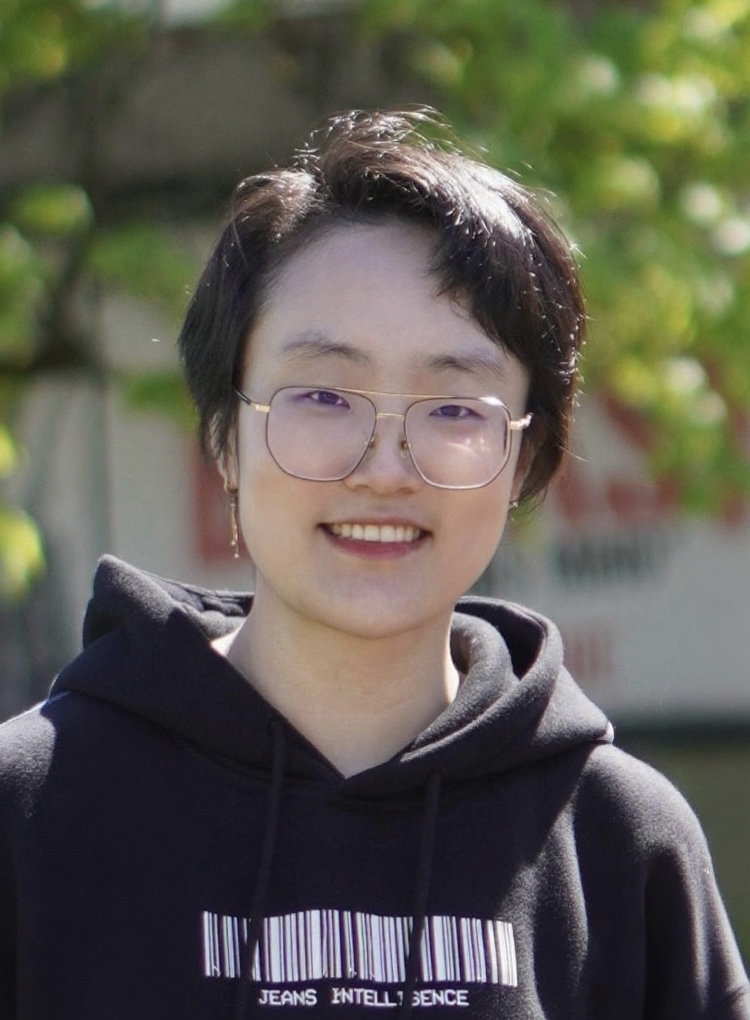
About me
I am a first-year PhD student in Astrophysics at the University of Cologne, focusing on multi-wavelength studies of Cosmic Reionization.
My research journey has spanned a wide range of topics, from stellar systems and exoplanetary dynamics to stellar evolution simulations and the observational analysis of distant galaxies. Engaging with such diverse projects has helped me develop both theoretical and data-driven approaches to research. (Explore my research projects to learn more about my work)
These experiences have also allowed me to refine my academic focus. Over time, I have come to recognize that my true passion lies in exploring the high-redshift universe, particularly the early formation of massive galaxies and the physical conditions that shaped the cosmos during its first billion years.
My research interests:
- Cosmic reionization processes
- Formation and evolution of massive galaxies at high redshift
- Molecular gas content and star formation histories in early galaxies
- Multi-wavelength spectroscopic analysis
I am particularly passionate about exploring with cutting-edge facilities like JWST and ALMA to probe the interplay between baryonic processes and the cosmic environment during key phases of galaxy assembly.
Research experience
Master's thesis
Investigating the Molecular Gas Reservoirs in Giant Galaxies at 3 < z < 8
09.2025 - 06.2026
Under the supervision of Dr. Mengyuan Xiao, Dr. Miroslava Dessauges and Prof. Pascal Oesch
Abstract:
Observations from JWST have revealed an unexpectedly high number density of massive galaxies within the first 2 billion years after the Big Bang (z > 3), raising fundamental questions about the primary driver of their rapid stellar mass assembly, the presence of common physical properties, and their eventual fate. To address these questions from a gas perspective, we investigate their molecular gas reservoirs through key submillimeter/millimeter emission lines with publicly available ALMA observations. Combining [C II] or CO line flux measurements with their stellar mass and star formation rates (SFRs) derived from spectral energy distribution fitting, we infer their molecular gas masses, molecular gas mass-to-stellar mass ratios and molecular gas depletion timescales. Our results suggest that massive galaxies at 3 < z < 8 exhibit inhomogeneous star formation efficiencies, with depletion timescales ranging from 0.17 to 4 Gyr, primarily driven by galaxy-to-galaxy diversities in burstiness, stellar feedback, and gas inflow. Assuming a time-averaged constant SFR, we conclude that the most massive star-forming galaxies and dusty star-forming galaxies will remain among the most massive and evolve into massive quiescent galaxies at later epochs, while the precise quenching epochs also depend on gas accretion and the molecular gas-to-stars conversion factor. Our work underscores the importance of ISM studies for understanding the early massive galaxy evolution, and shows that spectrally distinct galaxy populations evolve along different pathways, highlighting the need for population-specific analysis.
Previous research projects
Searching for broad-line emitting galaxies with JWST FRESCO data
02.2025 - 06.2025
Under the supervision of Ph.D candidate Alba Covelo Paz and Prof. Pascal Oesch
Download Project Report
- Developed a Python pipeline to identify broad-line emitting galaxies from JWST FRESCO NIRCam slitless spectroscopic data by multi-component Gaussian fit;
- Queried MAST to match selected candidates with HST observations, verifying the presence of broadened emission lines;
- Analyzed the physical properties of the identified galaxies, including black hole masses and stellar masses;
- Compared the BH-to-stellar mass ratios with relations established by published papers and explained the offsets.
Evection resonance in the hierarchical restricted 3-body problem
09.2024 - 12.2024
Under the supervision of Dr. Jérémy Couturier and Prof. Adrien Leleu
Download Project Report
- Simplified the Hamiltonian of the massless particle in a hierarchical restricted problem to an one-degree-of-freedom, autonomous, single-parameter and dimensionless one;
- Searched for the theoretical evection resonance by analysing the bifurcations of the phase space topology;
- Simulated the Sun-Earth-Moon system and the exoplanetary system of TOI-6303 b to confirm the existence of evection resonance with the N-body software NcorpiON.
MCMC algorithm application: Estimating the mass of exoplanets
10.2024 - 12.2024
As part of the course ‘Astrophysics & Data Science’
- Computed the maximum likelihood estimates of the physical parameters of a planet;
- Coded the Metropolis-Hastings algorithm;
- Computed the posterior distributions of the orbital parameters of a planet and the interval estimates of its mass.
Neural Network from scratch
10.2024 - 12.2024
As part of the course ‘Astrophysics & Data Science’
- Implemented all the functions needed to create a neural network without using any package besides numpy and matplotlib.pyplot;
- Trained the network with two datasets: a 2-class problem and a 3-class problem;
- Adjusted the number of neurons per hidden layer and the number of hidden layers to optimise the accuracy of the classification.
Population synthesis of wind-fed BH-HMXBs
11.2023 - 03.2024
Under the supervision of Dr. Zepei Xing and Prof. Marc Audard
- Simulated 500000 binaries by using the binary population synthesis code POSYDON;
- Selected wind-fed high-mass X-ray binaries with a black hole (BH-HMXBs) among the generated dataset;
- Analysed the main features of the binary population that evolved into wind-fed BH-HMXBs and compared them with observational data;
- Studied the impact of metallicity on the simulation outcome.
Curriculum Vitae
*If it does not show up, refresh the page.
Contact
You can reach me via email at songnanqi@ph1.uni-koel.de & qisongnan@outlook.com
1. Institute of Physics
University of Cologne
Zülpicher Str. 77, 50937 Lindenthal, Germany
Elements
Text
This is bold and this is strong. This is italic and this is emphasized.
This is superscript text and this is subscript text.
This is underlined and this is code: for (;;) { ... }. Finally, this is a link.
Heading Level 2
Heading Level 3
Heading Level 4
Heading Level 5
Heading Level 6
Blockquote
Fringilla nisl. Donec accumsan interdum nisi, quis tincidunt felis sagittis eget tempus euismod. Vestibulum ante ipsum primis in faucibus vestibulum. Blandit adipiscing eu felis iaculis volutpat ac adipiscing accumsan faucibus. Vestibulum ante ipsum primis in faucibus lorem ipsum dolor sit amet nullam adipiscing eu felis.
Preformatted
i = 0;

while (!deck.isInOrder()) {
    print 'Iteration ' + i;
    deck.shuffle();
    i++;
}

print 'It took ' + i + ' iterations to sort the deck.';
Lists
Unordered
- Dolor pulvinar etiam.
- Sagittis adipiscing.
- Felis enim feugiat.
Alternate
- Dolor pulvinar etiam.
- Sagittis adipiscing.
- Felis enim feugiat.
Ordered
- Dolor pulvinar etiam.
- Etiam vel felis viverra.
- Felis enim feugiat.
- Dolor pulvinar etiam.
- Etiam vel felis lorem.
- Felis enim et feugiat.
Icons
Actions
Table
Default
| Name |
Description |
Price |
| Item One |
Ante turpis integer aliquet porttitor. |
29.99 |
| Item Two |
Vis ac commodo adipiscing arcu aliquet. |
19.99 |
| Item Three |
Morbi faucibus arcu accumsan lorem. |
29.99 |
| Item Four |
Vitae integer tempus condimentum. |
19.99 |
| Item Five |
Ante turpis integer aliquet porttitor. |
29.99 |
|
100.00 |
Alternate
| Name |
Description |
Price |
| Item One |
Ante turpis integer aliquet porttitor. |
29.99 |
| Item Two |
Vis ac commodo adipiscing arcu aliquet. |
19.99 |
| Item Three |
Morbi faucibus arcu accumsan lorem. |
29.99 |
| Item Four |
Vitae integer tempus condimentum. |
19.99 |
| Item Five |
Ante turpis integer aliquet porttitor. |
29.99 |
|
100.00 |